
The Complete Guide for Pakistani Skin
Oily and acne-prone skin can benefit from topical vitamin C, particularly when the goal is to support antioxidant protection and improve the appearance of uneven skin tone and post-acne marks.
The real question is not whether oily skin can use vitamin C.it is which formula suits your skin and climate. In Pakistan, where hot and humid weather can make heavy skincare uncomfortable, texture, stability, packaging, and supporting ingredients all matter.
In this guide, we’ll explain how to choose vitamin C serum for oily skin, how to introduce it into your routine, what ingredients to look for, and which common mistakes can cause irritation or make a good serum feel unsuitable.
Why Oily Skin Needs Vitamin C (Not Just Dry Skin)
Vitamin C is best known as an antioxidant. Applied topically, it can help neutralize oxidative stress associated with environmental exposure, including UV radiation and pollution. Dermatology literature also describes vitamin C as having antioxidant, photoprotective, and pigmentation-related benefits.
This is particularly relevant in Pakistan. Daily exposure to sunlight, traffic pollution, heat, and dust can place additional oxidative stress on the skin. Vitamin C should not replace sunscreen, but it can complement a good sun-protection routine.
1. It Can Help With Post-Acne Marks
For many people with oily or acne-prone skin, the problem does not end when a pimple disappears. A flat brown or dark mark can remain for weeks or months afterwards.
Vitamin C may help improve the appearance of uneven pigmentation by influencing melanin production. Clinical research has found that topical vitamin C can have depigmenting effects, although visible improvement generally requires consistent use rather than overnight results.
That makes a well-formulated vitamin c serum for oily skin useful for people who want to work on dullness and post-acne discoloration without adding a heavy product to their routine.
How to Choose the Right Vitamin C Serum for Oily Skin
Not every vitamin C serum feels the same. Two products may contain vitamin C but have completely different textures and tolerability.
Choose a Lightweight Texture
For oily and combination skin, look for a serum that feels light and absorbs without leaving a thick or greasy film.
A water-based or lightweight serum is often more comfortable in Pakistani summers than a rich cream or heavily oil-based formula.
If your skin becomes shiny quickly, a non-greasy vitamin c serum for oily skin may be easier to use consistently.
Consider the Concentration
There is no single vitamin C concentration that is perfect for everyone. Many well-formulated products use concentrations around 10–15%, which can be a reasonable starting range for someone new to vitamin C.
Higher concentration does not automatically mean better results. A lower-strength product that remains stable and is used consistently may be more useful than an aggressive formula that causes irritation.
Understand the Form of Vitamin C
Vitamin C skincare products can contain different forms of the ingredient.
L-ascorbic acid is the pure form of vitamin C and has been extensively studied, but it is also relatively unstable. Its performance can be affected by factors such as oxygen, light, heat, and formulation conditions.
Derivatives such as 3-O-Ethyl Ascorbic Acid and Ascorbyl Glucoside are used in cosmetic formulations because they can offer different stability and formulation advantages.
For someone living in a hot climate, formulation stability is especially worth considering.
Look at the Supporting Ingredients
Some formulations combine vitamin C with other skin-supporting ingredients.
- Niacinamide: commonly used for supporting the skin barrier, brightening, and helping manage the appearance of excess oil.
- Ferulic acid: an antioxidant that has been studied in combination with vitamins C and E for improving formulation stability and photoprotection.
- Hydrating ingredients: such as hyaluronic acid or glycerin can make a serum more comfortable without necessarily making it greasy.
- Salicylic acid: can be useful for oily, blemish-prone skin, but it does not need to be combined with vitamin C in the same routine. Beginners may prefer using salicylic acid separately.
Ingredients to Be Careful With
If your skin is sensitive or acne-prone, be cautious with strongly fragranced formulas or products containing a high amount of drying alcohol.
The ingredient list matters, but so does the entire formulation. A serum that is technically suitable for oily skin may still irritate your face if it contains a combination of ingredients your skin does not tolerate.
Best Vitamin C Serum for Oily Skin in Pakistan: What to Look For
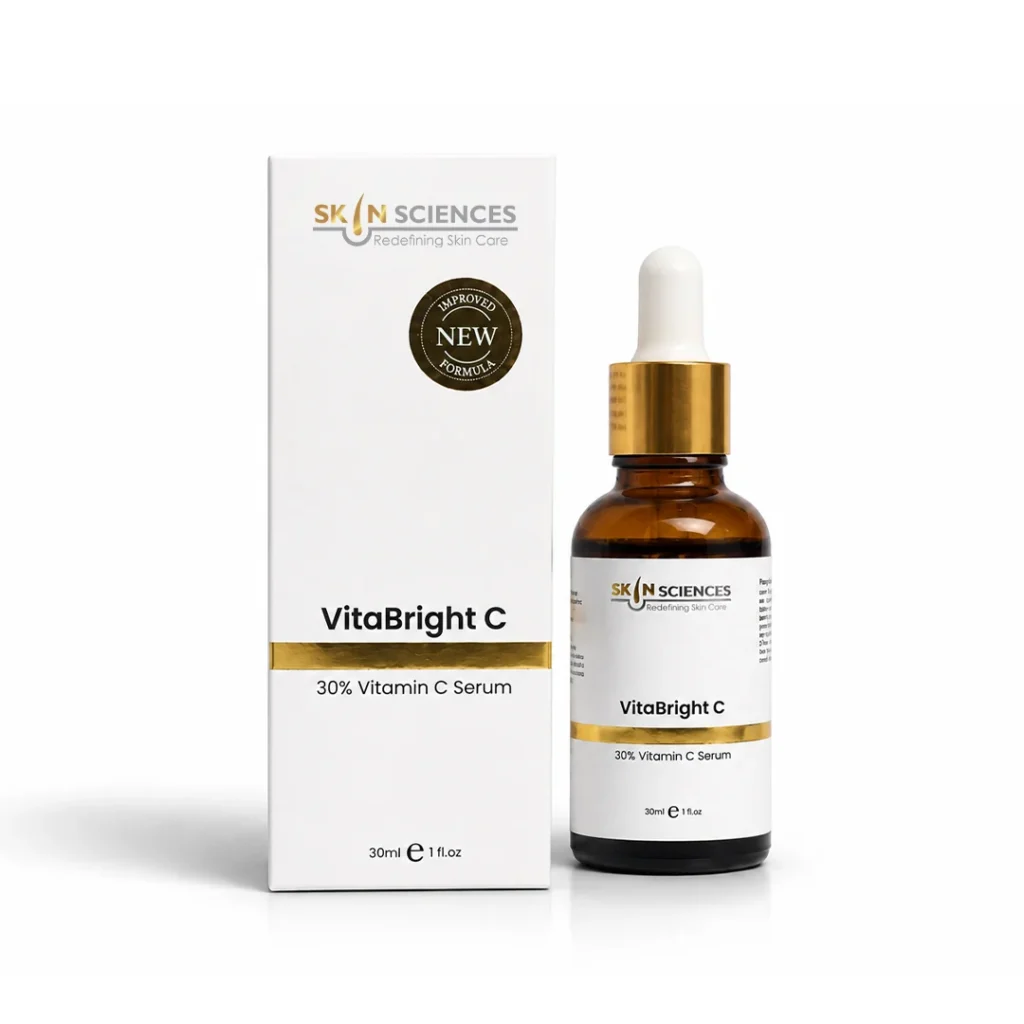
When people search for the best vitamin c serum for oily skin in Pakistan, Skin Sciencesthey often focus on concentration or price. Those factors matter, but they are not enough to judge a product.
Pakistan’s climate creates an additional formulation challenge. A serum that feels comfortable in a cool room may feel completely different during a humid Lahore or Karachi summer.
Stability Matters
Pure L-ascorbic acid is sensitive to environmental conditions. Research on vitamin C stability shows that heat, oxygen, light, and other formulation factors can contribute to degradation.
This is why packaging matters. An opaque or light-protective container with a well-designed dispensing system can help reduce unnecessary exposure to environmental factors.
If a vitamin C serum has significantly changed colour, smell, or texture, check the manufacturer’s storage and replacement guidance rather than assuming it is still performing normally.
Expensive Does Not Automatically Mean Better
The vitamin c serum for oily skin price in Pakistan can vary considerably depending on the brand, formulation, concentration, packaging, and imported ingredients.
A higher price does not guarantee better results. For oily skin, a stable, lightweight formula that you can comfortably use consistently may be a better choice than an expensive, very strong serum that causes irritation.
Instead of choosing based only on percentage or price, consider:
- Vitamin C form
- Concentration
- Texture
- Packaging
- Supporting ingredients
- Fragrance and potential irritants
- Your skin’s tolerance
- Storage requirements
This approach is more useful than simply looking for a product labelled “best.”
How to Use Vitamin C Serum for Oily Skin (Step-by-Step)
A simple routine is usually easier to maintain.
Morning Routine
- Cleanse your face with a gentle cleanser suitable for oily or combination skin.
- Pat your skin dry. Vitamin C does not need to be applied to completely dry skin to work, but allowing the skin to settle can be more comfortable if you are prone to irritation.
- Apply 2–3 drops of serum, or follow the amount recommended by the manufacturer.
- Allow it to absorb before applying the next product.
- Use a lightweight moisturizer if your skin needs it.
- Finish with broad-spectrum sunscreen, ideally SPF 30 or higher, according to your dermatologist’s advice and your daily exposure.
Vitamin C is a complement to photoprotection, not a replacement for sunscreen. Research supports its role as an antioxidant and adjunct to sun-protection strategies, but sunscreen remains fundamental.
Start Slowly
If you have never used vitamin C before, you do not have to apply it every morning immediately.
Try it 2–3 times a week for the first couple of weeks. If your skin remains comfortable, gradually increase frequency.
If you experience persistent burning, redness, swelling, or significant irritation, stop using the product and seek professional advice if needed.
Patch Test First
Apply a small amount to an inconspicuous area, such as the jawline or inner forearm, according to the product’s instructions.
Testing for several days can help you identify obvious irritation before applying the serum to your entire face. A patch test cannot guarantee that a product will never cause a reaction, but it is a sensible precaution.
Can Vitamin C Be Used With Other Actives?
Vitamin C can be incorporated into a routine that also contains ingredients such as niacinamide and hyaluronic acid.
If your routine already includes exfoliating acids or retinoids, however, you may prefer to separate them for example, vitamin C in the morning and retinol or salicylic acid in the evening. This is not because the ingredients are automatically incompatible, but because using several active ingredients together can increase irritation for some people.
Common Mistakes Oily Skin Users Make With Vitamin C
Even a good serum can become difficult to tolerate when it is used incorrectly.
Using Too Much
More serum does not mean faster results. A few drops are generally enough to cover the face when applied properly.
Blaming Vitamin C for a Heavy Formula
If a serum feels greasy or causes congestion, the entire formulation should be considered rather than blaming vitamin C itself.
Someone looking for vitamin c serum for oily acne-prone skin should pay attention to the vehicle, fragrance, oils, and other ingredients in the formula.
Skipping Sunscreen
Using an antioxidant serum while ignoring daily sun protection can undermine your overall approach to pigmentation.
If your main concern is vitamin c serum for dark spots oily skin, sunscreen is especially important because ongoing UV exposure can continue contributing to pigmentation.
Storing the Serum in Excessive Heat
Do not leave a vitamin C serum sitting beside a sunny window or in a hot car.
Keep the bottle tightly closed and follow the manufacturer’s storage instructions. For products containing less-stable forms of vitamin C, appropriate storage can be particularly important because heat and light can accelerate degradation.
Frequently Asked Questions
Does vitamin C serum cause breakouts on oily skin?
Not necessarily. Vitamin C itself is not automatically a pore-clogging ingredient. Breakouts or congestion may instead be related to the overall formulation, other ingredients, irritation, or an individual’s skin response.
If you have oily or acne-prone skin, choose a lightweight formula and introduce it gradually.
Can I use vitamin C serum every day on oily skin?
Yes, many people can eventually use vitamin C daily if their skin tolerates it. However, beginners should consider starting 2–3 times per week and increasing gradually.
There is no benefit in forcing daily use if your skin becomes irritated.
What is the best vitamin C serum for oily skin in Pakistan summer?
The best vitamin c serum for oily skin in Pakistan depends on your individual skin and the formulation. For hot and humid weather, look for a lightweight serum with a well-stabilized vitamin C form, comfortable texture, and suitable supporting ingredients.
A stable 10–15% formula may be a practical starting point for many beginners, but concentration alone should not determine your choice.
How should I use vitamin C serum for oily skin in summer?
Use it in the morning after cleansing, followed by a lightweight moisturizer if needed and sunscreen. Keep the product away from excessive heat and direct sunlight, and follow its storage instructions.
Should I apply moisturizer after vitamin C serum if my skin is oily?
Yes. Oily skin still needs hydration. Choose a lightweight, non-greasy or gel-based moisturizer if that texture works for you.
Skipping moisturizer is not a reliable way to control oil production and may leave the skin feeling uncomfortable or dehydrated.
Final Verdict:
Oily skin does not have to avoid vitamin C. In fact, a properly formulated serum can be a useful addition to a routine focused on antioxidant support, uneven tone, and the appearance of post-acne marks.
The key is choosing a lightweight, stable, non-greasy formula rather than assuming that the strongest or most expensive product will deliver the best results. Pay attention to the form of vitamin C, packaging, supporting ingredients, and how your own skin responds.
If you are new to vitamin C, start slowly, patch test first, and keep your routine simple. For Pakistani weather, a lightweight formula containing a stable vitamin C derivative and ingredients such as niacinamide can be a practical option.