
Eyelid Surgery in Lahore | Blepharoplasty & Ptosis
“You look tired.” If people keep telling you this after a full night’s sleep, your eyelids may be the reason. Skin that droops over the lashes, puffy bags underneath or a lid that sits too low can make you look older and more worn out than you feel. For some people, it also blocks part of their vision.
Eyelid surgery treats these problems, and the right operation depends on what is causing them in your case. At Institute Cosmetique in Lahore, Prof. Dr. Azim Jahangir Khan and his team, with over 35+ years of experience, will examine your eyes and tell you plainly what would help.
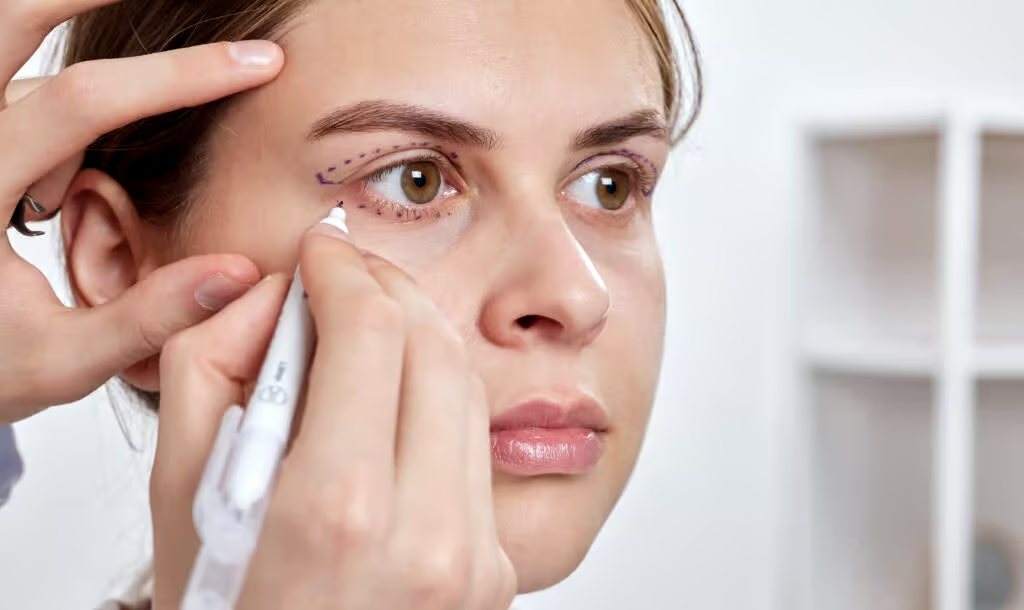
What Is Eyelid Surgery?
Eyelid surgery, also called blepharoplasty or eyelid correction surgery, treats the upper lids, lower lids or both. Depending on the problem, the surgeon may remove extra skin, move or remove fat, create a crease, or correct the muscle that lifts the upper lid.
The skin around the eyes is the thinnest on your body, so it shows ageing and family traits early. Creams can’t remove tissue that has stretched or bulged forward. That is the gap surgery fills.
The operation can be cosmetic, functional or both. The right approach comes from the cause of the problem, not just how the eyes look.
Types of Eyelid Surgery
Different eyelid problems need different operations. Some patients need one, and some have two done together.
Lower Eyelid Blepharoplasty
This treats under-eye bags, puffiness and loose skin below the eyes. The surgeon removes or moves the fat that is pushing forward and trims loose skin if needed. In some cases the cut is made inside the lower lid, so there is no scar on the outside. It can smooth the line between the lower lid and the cheek. Dark circles caused by pigment won’t change, so mention them at your consultation.
Upper Eyelid Blepharoplasty
This is the most common type. The surgeon removes or repositions excess skin, and a little fat if needed, from the upper lids. The cut is placed in the natural crease so the scar is hard to see. It suits people with loose or sagging skin, heavy-looking lids, a hidden crease, or skin that cuts into their side vision. Afterwards the eyes look more open, and eyeshadow sits properly.
Double Eyelid Surgery
If your upper lid has a single fold or only a faint crease, double eyelid surgery creates or defines one so the eye looks larger and more open. There are two common methods. The incisional technique forms the crease through a small cut, with the tissue secured to hold the fold, and it is often chosen for thicker lids or more loose skin. The non-incisional technique uses stitches placed through tiny openings to form the crease, and it suits thinner lids with little excess skin. The choice depends on lid thickness, skin looseness, fat distribution and what you want, and the height and shape of the fold are planned to suit your face.
Ptosis Correction
Ptosis means the upper lid sits lower than it should because the lifting muscle or its supports are weak. It can be there from birth, or develop with age, an injury or certain medical conditions. Removing skin alone won’t fix it, so the surgeon treats the muscle. The main techniques are levator advancement, where the lifting muscle is repositioned to raise the lid; levator resection, where the muscle is shortened to strengthen its pull; and the frontalis sling, where the forehead muscle is used to lift the lid when the levator muscle is very weak. When the drooping lid blocks your view, correcting it can improve both symmetry and sight. It won’t correct short-sightedness or other focusing problems.
Common Eyelid Concerns We Address
Drooping Upper Eyelids
A lowered lid makes you look sleepy and can shrink your field of view. Depending on the cause, treatment may involve removing skin, tightening the muscle or both.
Excess Eyelid Skin
Loose skin folds over the lash line, giving the eyes a heavy look and making them seem smaller. Removing it gives a cleaner outline.
Under-Eye Bags and Puffiness
Bags often run in families, which is why some people notice them in their twenties. The treatment works on the fat behind the bulge, not just the skin on top.
Uneven Eyelid Creases
When one fold sits higher than the other, or only one eye has one, the eyes look mismatched. The surgeon can bring the two sides closer, though a little natural difference always remains.
Benefits of Eyelid Surgery
The first thing people notice is how rested they look. The eyes seem wider and brighter, and the heaviness above and below them lifts.
If your upper lids were blocking your sight, you may see more clearly afterwards. Makeup is easier to apply, and the two eyes look more balanced. Because the cuts follow the lid’s natural lines, scars fade into the crease or sit out of view.
Results depend on your anatomy, the surgical technique and how you heal. Surgery improves how your lids look today, but your skin will keep ageing.
Is Eyelid Surgery Right for You?
Think about what bothers you when you look in the mirror, or what you notice during the day. Maybe your lids feel heavy by evening, or makeup creases into a fold that wasn’t there a few years ago. Maybe you tilt your head back to see properly, or the bags under your eyes look the same no matter how much you sleep. If any of this sounds familiar, a consultation is worth your time.
Age matters less than the cause. Some people need surgery in their thirties because of family traits, while others reach their sixties without needing it at all. What counts is that the problem comes from skin, fat or muscle, and that surgery can actually correct it. Patients with a missing or faint crease, or with eyes that don’t match, can also be considered.
You’ll do best if you’re in good general health, don’t smoke or are ready to stop, and want a natural refresh, not a different face.
A few things mean the doctor needs to look more closely before deciding: dry eyes, other eye conditions, earlier eyelid surgery, thyroid problems, uncontrolled blood pressure or a bleeding disorder. None of these automatically rules you out. They just mean your plan has to be more careful, and in some cases the condition needs treating first.
How Is Eyelid Surgery Performed?
Before surgery, the surgeon checks your lid position, skin elasticity, fat distribution, muscle function and overall eye health. On the day, the steps are:
- Anaesthesia. Most patients have local anaesthesia, often with sedation. General anaesthesia may be used for longer or combined operations.
- Marking. The surgeon marks the areas to be treated while you sit upright.
- Correction. Skin or fat is removed or repositioned, or the lid muscles are adjusted, depending on your plan.
- Closing. The cuts are closed with fine stitches.
Surgery time depends on how many procedures you’re having. Most patients go home the same day, so bring someone to drive you.
Risks and Possible Complications
Eyelid surgery is done around delicate parts of the eye, so it helps to know the risks beforehand. They include:
- Infection or bleeding
- Visible scarring
- Dry eyes, which may be temporary or last longer
- Difficulty closing the eyes fully
- Uneven lid position
- Changes in lid shape
- Temporary blurred or double vision
- The need for revision surgery
A careful assessment and good surgical planning reduce these risks, but they can’t remove them completely. Go through them at your consultation so you decide with the full picture.
Frequently Asked Question
Blepharoplasty deals with excess eyelid skin and fat. Ptosis correction treats a drooping lid caused by weakness in the lifting muscle or its supports.
Lower eyelid blepharoplasty can reduce bags by removing or repositioning the prominent fat and, if needed, trimming loose skin.
Results can last many years, but natural ageing and changes in skin elasticity may slowly affect the lids over time.
Anaesthesia controls pain during the operation. Afterwards you may feel swelling, tightness and mild discomfort, which painkillers usually manage.
Yes. Both can be done in one session when your condition and general health allow it.
When a drooping lid blocks your view, correcting it can help you see better. It doesn’t fix short-sightedness or other focusing problems.
Not if only what’s needed is changed. The aim is a fresher version of your own face, with normal lid movement.
The cost depends on which lids are treated, whether ptosis correction or double eyelid work is included, and the type of anaesthesia. The doctors give you an estimate after your consultation.
Your surgeon will confirm the timing. Makeup usually waits until the cuts have healed, and contact lenses are generally off limits for about two weeks.