
Rhinoplasty, Revision Rhinoplasty and Septoplasty in Lahore | Institute Cosmetique
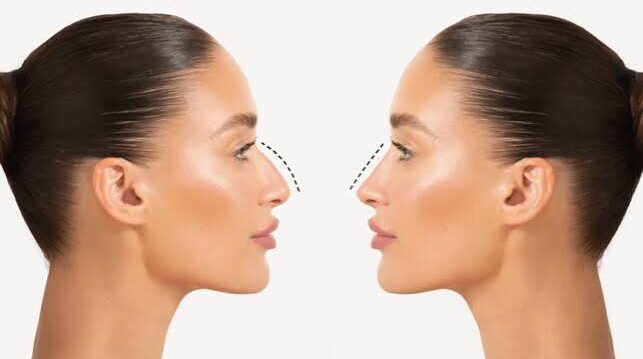
Your Nose, Your Face, Your Breath
Your nose sits in the middle of your face, so it is the first thing people see. It also lets you breathe, so you feel it every second of the day. At Institute Cosmetique in Lahore, Prof. Dr. Azim Jahangir Khan helps with both the look and the breath. Where does that help begin? It begins with a word you may have heard: rhinoplasty.
What Is Rhinoplasty?
Rhinoplasty is surgery that changes the shape of your nose. The surgeon works on the bone at the top and the cartilage below it. Cartilage is the soft, bendy part you feel when you wiggle the tip of your nose. People choose this surgery for three reasons, and each reason has its own story.
- Looks: the nose feels too big, too wide or too bumpy
- Breathing: the nose stays blocked
- Repair: the nose was hurt by an accident or an illness
Each story needs a different surgery. Let us meet them one by one.
Our Nose Surgeries
Three surgeries come first, because people ask about them most.
Rhinoplasty
Rhinoplasty gives your nose a new shape that fits your face. Dr. Khan can lower a bump, lift a low tip, make wide nostrils smaller, or make the whole nose a little smaller. Before you decide, you should know the facts.
- Good for: a bump on the bridge, a round or wide tip, a nose that leans to one side
- Time: about 1.5 to 3 hours
- Sleep: general anesthesia, or light sedation in some cases
- Final look: about 12 months later, when all the swelling is gone
But what if you had nose surgery before and you still feel sad when you look in the mirror? The next surgery is for you.
Revision Rhinoplasty
Revision rhinoplasty fixes a nose that was operated on before. Maybe the shape looks uneven. Maybe breathing got harder. This surgery is harder than the first one, because scar tissue now sits where smooth tissue used to be. So Dr. Khan may need extra cartilage from the nose wall, the ear or a rib. Doctors usually say to wait about 12 months after the first surgery. Why so long? Swelling needs time to leave, and the skin needs time to turn soft again. Sometimes the biggest problem is a blocked nose, and the cause is a bent wall inside. That wall has a name.
Septoplasty
Septoplasty makes a bent septum straight. The septum is the thin wall that splits your nose into a left side and a right side. When it bends, air cannot pass well. You may snore, feel stuffy, or breathe through your mouth. Septoplasty works inside the nose, so it changes how you breathe and keeps your looks the same. It takes about 1 to 2 hours. Some people need better breathing and a new shape together, and for them there is joint surgery.
Surgeries for Easier Breathing
- Septorhinoplasty joins septoplasty and rhinoplasty in one sleep. The wall inside gets straight and the outside gets a new shape. You heal one time instead of two.
- Turbinate reduction makes swollen turbinates smaller. Turbinates are small bumps inside the nose that warm the air you breathe. When they swell, they block the way. Dr. Khan often does this together with septoplasty.
- Nasal valve repair opens a narrow gate. The nasal valve is the tightest spot in your airway. When it is weak, the sides of the nose fall inward each time you breathe in. Small pieces of cartilage hold it open.
Once the air flows well, we can think about shape.
Surgeries for a Finer Shape
- Tip plasty changes only the tip of the nose. It lifts a droopy tip or makes a round tip sharper.
- Alarplasty makes wide or flared nostrils smaller. The cuts sit in the natural folds, so they are hard to see.
- Dorsal hump reduction smooths a bump on the bridge. It is the most common reason people come to see us.
- Preservation rhinoplasty keeps the top of your own nose bridge and reshapes it gently. Dr. Khan checks your nose first to see if it fits.
- Ethnic rhinoplasty respects your family look. Noses differ in skin, tip and bridge, so the goal is a nose that matches your face and your roots.
- Augmentation rhinoplasty lifts a low bridge or a flat tip. Dr. Khan uses your own cartilage, and sometimes an implant.
- Reconstructive rhinoplasty rebuilds a nose after an injury, an infection, skin cancer surgery or a birth difference.
- Cleft rhinoplasty fixes the nose of a person born with a cleft lip or cleft palate.
- Non-surgical rhinoplasty uses filler to smooth small bumps with no operation. It lasts about 6 to 18 months and cannot make a nose smaller.
Which one is right for you? The first answer is simple.
Who Can Have It, and Who Should Wait
You can have nose surgery if you are healthy, if your face has stopped growing, and if your goal is clear and real. Most girls stop growing in their mid-teens, and boys a little later. You should wait if you still grow, if you smoke and will not stop, or if you hope surgery will fix your whole life. Surgery changes a nose. It does not change who you are. Dr. Khan tells you the truth about which group you are in. Then you may wonder how he reaches your nose. There are two ways in.
Open door | Closed door | |
Cuts | A tiny cut on the skin between the nostrils, plus cuts inside | All cuts inside the nose |
View | The surgeon sees everything | The surgeon sees less |
Best for | Big changes, tip work, grafts, revision | Small changes, like the bridge |
Mark | A tiny line that fades | No mark on the outside |
Neither door is best for everyone. Dr. Khan picks the door that is safest for your nose. Now picture the day you walk through ours.
What Can Go Wrong and How We Keep You Safe
Every surgery has risks, and you deserve to hear them. They include bleeding, infection, swelling that stays too long, a stuffy nose, an uneven shape, numb skin that usually gets better, and a bad reaction to anesthesia. A small number of people need a second surgery. Dr. Khan lowers these risks with careful planning, a clean operating room and clear aftercare rules. He also tells you every risk before you say yes. Once you know the risks, the next question is money.
What Changes the Price and How We Tell You
Several things change the price: which surgery you need, whether two surgeries join, whether cartilage comes from the ear or rib, the anesthesia, and the care after surgery. Revision surgery usually costs more than a first surgery, because it is harder. After your visit, we give you the full price in writing, so nothing surprises you. Septoplasty may be covered by insurance when you need it for breathing, so ask us. Price matters, and so does the person holding the tools.
Healing Days and Healing Months
Everyone heals at their own speed. This is a common path.
- First 2 days: rest with your head up. Swelling, bruises near the eyes and a stuffy nose are normal.
- Days 5 to 7: the splint comes off. Many people go back to desk work.
- Weeks 2 to 3: bruises fade and most swelling goes down.
- Weeks 4 to 6: most daily life is fine. Ask Dr. Khan before any sport.
- 3 to 6 months: the tip keeps getting softer and smaller.
- 12 months: your final nose is here.
Do not blow your nose, play contact sports, or rest heavy glasses on your nose until Dr. Khan says yes. Healing is slow and calm, and every surgery also has risks.

Meet Dr. Azim Jahangir Khan and Institute Cosmetique
Prof. Dr. Azim Jahangir Khan leads nose surgery at Institute Cosmetique in Lahore. He is board certified by the American Board of Dermatology and the American Board of Internal Medicine. He is also a fellow of the American Academy of Cosmetic Surgery. He spent more than 15 years in the United States, where he trained and then taught skin and cosmetic surgery. In 2005 he came home to Pakistan to give patients the same care. Today he has about 35 years of experience. Why does this matter to you? The person who plans your nose should know it deeply. After surgery, our team stays close to you, and we share before and after photos with the patient’s consent. So where can you find us?
Your Questions, Our Simple Answers
Swelling and bruises fade in 2 to 3 weeks. Full healing takes up to 12 months.
Most people feel pressure and a stuffy nose more than sharp pain. Medicine keeps you comfortable, and each day feels easier.
Rhinoplasty changes the shape of the nose. Septoplasty straightens the wall inside so you can breathe. Together they are septorhinoplasty.
Yes. Scar tissue makes it harder, so the surgeon’s skill matters a lot.
It works inside, so the outside usually stays the same. If you want a new shape too, septorhinoplasty is the way.
Closed surgery leaves no mark outside. Open surgery leaves a tiny line between the nostrils that fades well for most people.
Filler lasts about 6 to 18 months and suits only small changes.
If you are healthy, done growing and have a clear goal, you may. Only a visit with Dr. Khan can say for sure.
Ready to Talk? Book Your Visit
You do not need to know what you want. Come and tell Dr. Azim Jahangir Khan what bothers you. He will listen, look and explain and then he will show you the best way forward at Institute Cosmetique.